Saudi Arabia’s fund now ranks at the eleventh largest with $224 billion of assets, while Qatar’s is at ninth place with $320 billion of holdings, according to the SWF Institute.
The PIF, which plans to control more than $2 trillion by 2030, is central to Saudi Arabia’s effort to diversify the economy away from oil under a plan known as Vision 2030. The sale of about a 5 percent stake in oil giant Saudi Arabian Oil Co. is expected to provide more funds for investments.
Of the $54 billion PIF invested last year, $45 billion was in information technology, $4.8 billion in real estate, $2.4 billion in consumer staples and $1 billion into industrials, according to the SWF Institute data. It didn’t give details of the deals.
The fund accounted for more than 70 percent of Middle East sovereign deals, making up for a drop in investments from Qatar and Abu Dhabi where the merger of Mubadala and International Petroleum Investment Corp. led to fewer deals “as the combined entity reviewed assets and strategy,” according to Rachel Pether, an adviser at the SWF Institute.
Qatar Blockade
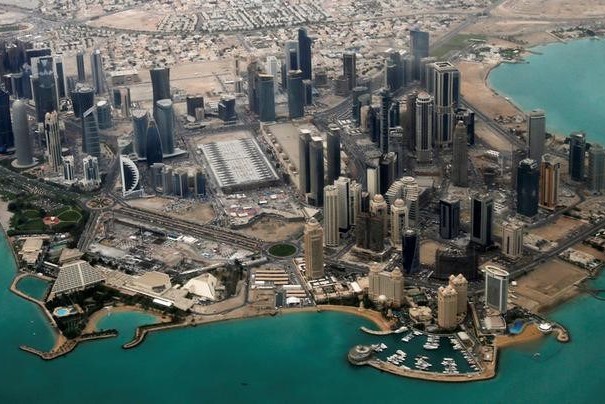
For Qatar, an eight-month boycott by neighboring states including the United Arab Emirates and Saudi Arabia has forced the country’s sovereign fund to focus on its economy and financial system, instead of trophy assets. The QIA has injected billions of dollars into local banks to shore up liquidity as the ongoing campaign hurts lenders.
As well as holding off on new investments, the QIA is reversing a decade-long run in high-profile foreign deals by selling assets. The QIA last year sold a block of shares in luxury jewelry retailer Tiffany & Co after reducing stakes in Credit Suisse Group AG and Rosneft PJSC.
This year, sustained low oil prices are expected to hurt appetite for deals from the region’s sovereign funds.