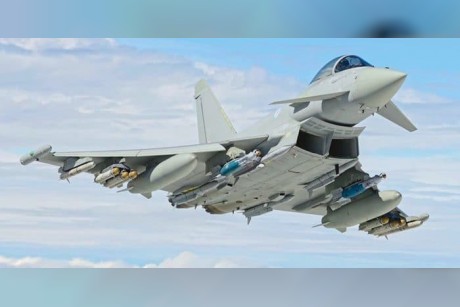
In less than two years, Qatar will have bought 84 combat planes from three NATO countries: 24 Rafales in March 2016, 36 F-15QAs before summer, and 24 Eurofighters. In case of the Rafales, it’s only a letter of intent, but let's pretend as if the sale of the Eurofighters is final.
A total of 84 new combat jets.
Eighty four fighters, added to the world's third largest reserves of oil and gas, a population of only 2.7 million, and economic and diplomatic sanctions imposed by neighbors (Saudi Arabia, United Arab Emirates, Bahrain, Egypt).
With the Eurofighters in addition to the Rafales and the F-15s, Qatar not only owns three distinct fleets of combat jets, three supply chains and stocks, three training courses, but also three fighter planes with relatively close capabilities and missions, each with an active antenna radar, air-to-air versus air-to-ground versatility, and the ability to deploy cruise missiles.
The two enemy brothers, Rafale and the Eurofighter, have relatively similar carrying capacities (guided bombs, cruise missiles, anti-ship missile Marte for the Eurofighter, Exocet for the Rafale, long-range Meteor missile for the two ...)
Operational logic is not the driving force behind these purchases. A wider explanation is that Qatar is expanding its supplier base to secure international support amid the crisis it is experiencing at the regional level.
Translated from Areobuzz.com