Qatar has urged the four countries imposing diplomatic and trade boycott against it to see reason and allow their citizens to attend the 2022 FIFA World Cup in Doha, saying that politics and sport must be separate. Doha’s words made observers see the Qatari regime as living in denial, as if the boycott did not even slightly had its impact on its endeavors.
On Nov. 20, Qatar’s Secretary-General of the Supreme Committee for Delivery and Legacy, Hassan Al-Thawadi told reporters, “We separate politics from sports. We hope that the blockading nations see reason in this matter and let their people to be able to participate in this once in a lifetime opportunity.”
Thawadi’s statement was seen as defying logic, for many cannot forget the role Doha played in plotting and leading schemes against the national security of Arab countries, let alone that sports cannot be separated from politics, society or business.
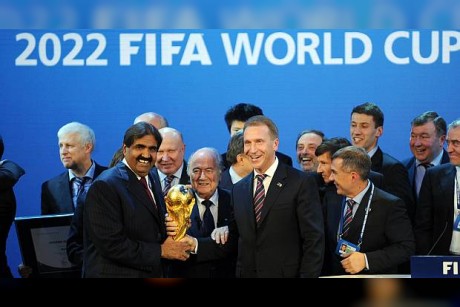
In September, the Arab Federation for Human Rights called for pulling the 2022 World Cup from Qatar by providing two reports; one report claims that Qatar monetarily bribed officials in order to host the World Cup, Saudi News Channel reported.
Qatar aims to use sports, especially the World Cup, to project itself on the global stage, which is one of the reasons why Qatar has been hosting an array of sporting events.
Qatar has been following such deceptive strategies on other scales; Doha was excluded from attending the Riyadh forum of Islamic Military Counter Terrorism Coalition's Ministers of Defense Council to counter terrorism. International and regional reports exposed Qatar’s support to terror organizations and individuals, a matter that makes one wonder how a state supporting terrorism could ever attend a meeting on the elimination of terrorism.
The forum called for the cessation of terrorist financing from terrorist organizations and countries supporting terrorism. It also aimed at the rejection of extremist religious discourse. All of these strategies are exactly the opposite of what Qatar does, as it embraces, supports and incites extremists through its biased media arms.
On Nov. 26, Crown Prince Mohammed Bin Salman inaugurated the session under the title “United against Terrorism”. Top defense officials from some 40 Muslim-majority countries met for a summit aimed at countering "terrorism".
Scenarios such as attending the World Cup in Doha makes the Qatari regime realizes that not all things can be solved with its “power of money”. The tiny Gulf emirate is highly dependent on its financial capabilities in solving its security and economic issues; it relied on Turkey and Iran to provide it with food, commodities, and even arms since the boycott was initiated.
Question marks are revolving around Thawadi’s press statement; does the Qatari regime think the crisis will last until 2022? If so, will it have the strength to survive one of the biggest diplomatic crisis that hit the Gulf region until 2022?
On June 5, Egypt , Saudi Arabia , the United Arab Emirates and Bahrain decided to cut all diplomatic ties with Qatar under accusations that the state destabilizes the region by supporting terrorism and allying with the regional foe Iran.
The boycotting countries halted all land, air and sea traffic with Qatar, ejected its diplomats and ordered Qatari citizens to leave their states within 14 days.
The Arab countries listed 13 demands to be met by Qatar, including severing ties with terrorist groups, closing down the pan-Arab Al Jazeera satellite channel, downgrading ties with arch-rival Iran and the closure of the Turkish air base in Qatar.